
Abstract:
In today’s digital era, consumer behavior in the retail industry has undergone significant transformation, prompting retailers to shift from traditional models toward integrated omnichannel and multichannel strategies. This study proposes a conceptual framework for developing omnichannel retail strategies, grounded in theoretical models and informed by practical implementation, with particular attention to adaptability within the Vietnamese market context. Drawing inspiration from the Tchibo omnichannel model, the framework emphasizes four key pillars: seamless channel integration, real-time inventory synchronization, enhanced digital engagement, and data-driven personalization. The findings underscore the critical importance of aligning online and offline operations to deliver a cohesive customer experience and achieve sustainable growth. This case study offers valuable insights for retailers in emerging markets seeking to design and implement effective omnichannel strategies that can flexibly respond to evolving consumer expectations in the digital economy.
Keywords: omnichannel strategies, retailing industry, online & offline channel, Tchibo Omnichannel Model, data-driven personalization.
1. Introduction
Nowadays, retailing industry is fierce competition in free market, there are a lot of strong brand names, which introduce their retailing business to Vietnamese market such as: Circle K, Win-mart, coop-mart, Bach Hoa Xanh, Bis’mart, Family-mart,… therefore, retail systems pay attention on their retailing strategies to improve their competition. Over the past few years, retail models that once seemed sufficient like traditional or multichannel strategies have begun to show their limitations. In response, omnichannel retailing has increasingly come into focus, aiming to ensure that customers can navigate seamlessly between physical and digital touchpoints. The core idea isn't entirely new, but its integration with personalization and real-time responsiveness has changed the game (Nguyen, McClelland, & Nguyen, 2022). Coffee retail has not been immune to this shift. In fact, the industry may be one of the clearest examples where omnichannel thinking aligns with evolving consumer behavior. As customers expect more convenience, faster access, and tailored engagement, omnichannel approaches offer companies the tools to respond dynamically. According to Nguyen et al. (2022), this isn’t just a technological transformation - it’s about how consumers perceive and connect with brands. And during the COVID-19 disruption, Gupta et al. observed that coffee chains were among the first movers in adopting digital tools to retain loyalty and operational flexibility.
With a unique identity in the world's coffee industry, Vietnam is the second biggest coffee exporter and one of the fastest-growing coffee domestic-consumption markets. It is also expected to be the latest addition to an export-driven industry whose past decade has witnessed a sharp rise in local coffee culture, especially in the urban areas. The change has been characterized by the rapid emergence of both local and international coffee chains, evolving consumer behaviors as younger consumers now demand greater convenience, access on digital platforms, and personalized experiences (Nguyen & Akbari, 2024). These have increasingly become part of the rapidly growing online adoption and an omnichannel retail behavior. Phuc (2021) analyzed The Coffee House, and it was found that by introducing things such as mobile ordering, digital loyalty apps, and a strong social media presence, customer retention would have been tremendously enhanced during the COVID-19 period. Also, Nguyen et al. (2023) discussed the fact that Vietnam's retail industry, most especially coffee, has adopted a modern blended reinvented aspect where online ordering amounts were later picked up in-store, with customer analytics included as well.
Omnichannel retailing has today become an inevitable means to stay competitive and create customer relationships for a long span. Unlike traditional or multichannel systems, omnichannel systems offer seamless integration and consistency of service and experience across all points of customer contact like touch points, distribution points, a true omnichannel experience. This conception emerges as not just a trend in marketing but rather a complete transformation of the business (Nguyen, McClelland & Nguyen, 2022).
From the supply chain and operations perspective, omnichannel systems provide both agility and accuracy in demand forecasting, thus enabling businesses to respond quickly to consumer fluctuations. In fact, this is so vital for some sectors like food and beverage because the shifts in consumer preferences are so rapid, and fulfillment expectations are so high (Nguyen & Akbari, 2024).
The main objective of this study is to develop a robust and effective omnichannel retailing strategy for Perfetto Vietnam. This strategy is intended to help the company optimize its sales operations, enhance the customer experience, and ultimately drive revenue growth. To achieve this, our research will focus on the following specific objectives:
- Analyze and compare omnichannel retailing models
- Evaluate Perfetto Vietnam’s current retail strategy and identify areas for improvement
- Develop a omnichannel retailing strategy for Perfetto Vietnam.
2. Literature review
2.1. Omnichannel retailing
Omnichannel retailing can be defined as a customer-centric strategy that delivers a seamless experience by integrating all available contact and transaction channels, such as physical stores, e-commerce platforms, mobile applications, and social networking sites - into a unified system. This approach ensures that customers receive consistent messaging, pricing, and service regardless of which channel they choose to interact with. It allows for flexible movement between online and offline spaces, facilitating convenience in purchasing behavior (Nguyen, McClelland, & Nguyen, 2022). Ultimately, omnichannel strategies aim to offer a uniform, seamless, and personalized experience that minimizes friction in the customer journey. This approach not only drives customer retention and sales growth, but also allows businesses to stay aligned with rapidly evolving consumer expectations in the modern digital environment (Chen & Habibi, 2023). In the coffee industry, the adoption of omnichannel retailing has become increasingly strategic, particularly in urban markets where consumer expectations for convenience and digital engagement are high. For instance, Luckin Coffee in China has successfully integrated its mobile application with in-store systems and third-party delivery platforms, enabling customers to place orders via the app, schedule pickups, or receive deliveries with minimal friction. This model not only enhances operational efficiency but also supports personalized marketing and customer loyalty. Similarly, the German coffee retailer Tchibo has adopted a robust omnichannel model by integrating its online store, mobile app, and physical locations. Customers can check real-time inventory at specific outlets, place orders online, and select in-store pickup options. These practices demonstrate how omnichannel frameworks allow coffee retailers to address logistical challenges, improve customer satisfaction, and remain competitive in a rapidly evolving retail environment (Nguyen & Akbari, 2024).
2.2. Big data and personalization
In the context of modern retailing, big data refers to the collection and processing of large-scale, high-velocity customer information across various platforms—both digital and physical. These datasets originate from diverse touchpoints such as mobile app usage, e-commerce activity, in-store transactions, and social media interactions. According to Nguyen, McClelland, and Nguyen (2022), big data is essential for understanding consumer behavior in real time, enabling more agile and informed decision-making throughout the retail value chain. Personalization, on the other hand, involves leveraging these data insights to deliver tailored experiences to individual customers. This includes customizing product recommendations, promotional content, and service interactions based on previous behaviors, preferences, and predictive modeling. Chen and Habibi (2023) emphasize that when personalization is powered by big data and embedded in an omnichannel structure, it significantly enhances customer engagement and satisfaction. The integration of big data and personalization enables retailers to go beyond static segmentation. Instead, they can dynamically adapt content and offers to changing customer patterns, thereby increasing relevance, loyalty, and conversion. This synergy is a cornerstone of successful omnichannel strategies in today's data-intensive retail landscape (Verhoef, Kannan, & Inman, 2021).
2.3. Integration of online and offline channels
Today, the concept Online to Offline (O2O) becomes popularity for retailers to provide better services. Sarkar Biswajit et.al., (2021) considered online and offline channels on leadtime and variable demand. These are very important for setting up merchandises (stock levels) for retailing system. We know that, the integration of online and offline channels refers to a retail strategy that combines both digital and physical touchpoints to create a cohesive and seamless shopping experience for customers. This approach allows customers to interact with the brand across multiple channels whether browsing products on a website, shopping through a mobile app, or making purchases in a physical store-while maintaining consistent service, product availability, and messaging (Verhoef, Kannan, & Inman, 2021).
2.4. Social media and digital engagement
Social media and digital engagement refer to the strategic use of online platforms - including Facebook, Instagram, TikTok, and WeChat - to create meaningful, real-time interactions between brands and consumers. Rather than functioning solely as advertising channels, these platforms facilitate two-way communication, community-building, and personalized content delivery. According to Chen and Habibi (2023), social media in the retail context now plays a central role in shaping the customer journey by enabling instant feedback loops, targeted promotions, and immersive brand experiences. Unlike traditional digital marketing, digital engagement focuses on sustained interaction and emotional connection. Retailers increasingly deploy tools such as live-streaming, user-generated content campaigns, and AI-driven chatbots to foster deeper connections. These strategies transform social platforms into dynamic ecosystems where brand loyalty and advocacy can thrive (Nguyen, McClelland, & Nguyen, 2022).
2.5. Multichannel, cross-channel, and omnichannel models
Omnichannel retailing integrates all available sales and communication channels to create a seamless and unified shopping experience for customers, ensuring consistent messaging and service across all touchpoints. According to Verhoef, Kannan, and Inman (2021), omnichannel retailing provides a fully connected customer experience, enhancing satisfaction and loyalty by allowing customers to move effortlessly between digital and physical platforms. However, the complexity and cost of implementing omnichannel systems remain a challenge, particularly in terms of data synchronization and technology integration (Piotrowicz & Cuthbertson, 2014)
2.6. Conceptual framework consideration
Step 1: Data Collection and Current State Analysis: Before implementing the omnichannel strategy, Perfetto needs to collect data from the existing offline and online channels to assess the current situation. Specifically, the company should gather sales data from both offline and online channels to compare their growth. Customer surveys will provide insights into customer satisfaction, differences in the shopping experience between online and offline, and areas for improvement
Step 2: Designing the Omnichannel Solution: After analyzing the data and identifying the problems to be solved, Perfetto needs to design the omnichannel solution to connect online and offline channels seamlessly.
Step 3: Integrating Technology and Improving Sales Channels: To implement this model, Perfetto must upgrade its current systems such as CRM, and inventory management systems to ensure real-time data synchronization across all platforms.
Step 4: Implementing and Monitoring Performance Metrics: The most relevant performance metrics to monitor include online revenue, which will help assess the growth of the online sales channel. Another important metric is the conversion rate, measuring how effectively online customers are converted into in-store visits or purchases.
Step 5: Identifying Challenges and Mitigation Strategies: One major challenge is related to technology integration. Another challenge could be the adoption of new technologies by employees.
3. Data collection and analysis
3.1. Primary data
The original questionnaire was designed to capture detailed insights into channel preference, shopping behaviour, and customer satisfaction across Perfetto’s online and offline retail environments. Its open-ended questions probed factors such as reasons for choosing a channel, barriers encountered during purchase, and expectations for a seamless “cross-channel” experience. These aspects are essential for understanding the full customer journey and identifying opportunities to refine Perfetto’s omnichannel strategy. Sampling Process:
- The respondents for the survey were selected using a convenience sampling method, whereby customers who had made recent purchases were invited to participate.
- The sample was expected to yield a diverse set of responses, reflecting different behaviours, preferences, and challenges across offline and online channels.
- The responses were analysed to identify key trends, customer barriers, and areas where Perfetto could improve its omnichannel experience.
The questionnaire was distributed through two channels: it was emailed to recent online purchasers and handed directly in store to offline shoppers, ensuring a wide range of perspectives. A total of 124 forms were collected, of which 111 valid responses were retained for analysis; these responses served as the basis for charts illustrating the company’s current pain points.
3.2. Secondary data
To situate Perfetto’s case in its competitive and consumer context, we conducted a desk-based review of recent, high-authority sources published between 2021 and 2024. Selection criteria were: (i) relevance to omnichannel retailing or coffee/F&B markets in Việt Nam, (ii) empirical or large-sample basis, and (iii) verifiable provenance (consultancy white papers, government statistics, peer-reviewed articles). Key inputs include:
• McKinsey (2023), showing that 50–75 % of Vietnamese shoppers research online before buying offline, highlighting the strategic value of integrated touch-points.
• NielsenIQ Retail Measurement (2024), which records double-digit e-commerce growth in packaged-coffee sales, supporting the surge observed in Perfetto’s own online revenue.
• General Statistics Office of Việt Nam datasets on household spending and internet penetration, used to size the addressable digital market.
• Comparative case studies on Tchibo (Germany) and Luckin Coffee (China), consulted for best-practice benchmarks in inventory synchronisation and mobile app engagement. Figures from these sources were synthesised into a concise industry profile and used to cross-validate the themes that emerged from the primary survey-particularly the importance of stock accuracy, price consistency and convenience. This triangulation strengthens the external validity of the study’s subsequent recommendations.
3.3. Case Study: Perfetto Vietnam
Offline Channels: Offline channels remain the primary source of revenue for Perfetto, contributing 98% of total revenue in 2024. These channels include retail distributors, cafes, restaurants, and direct purchases at corporate offices. Over the past two years, the offline segment has shown steady growth, with sales increasing from 36.64 billion VND in 2023 to 42.6 billion VND in 2024, reflecting a 13% growth rate. From a customer experience perspective, offline channels are appreciated for providing a tactile shopping experience and ensuring product availability. However, survey feedback reveals several challenges that need to be addressed.
Online Channels: Online platforms have demonstrated significant growth, although they contribute a smaller portion of Perfetto's overall revenue. Online sales increased from 107.58 million VND in 2023 to 782.71 million VND in 2024, representing an impressive growth rate of 86%. This surge reflects the growing popularity of e-commerce among Perfetto’s customer base, as more consumers turn to online shopping for convenience and accessibility.
Data Synchronization: The absence of real-time synchronization between online and offline channels creates significant discrepancies in product availability.
Service Consistency: Perfetto’s sales channels currently face inconsistencies that negatively impact customer trust and satisfaction. Two key areas highlight these challenges: The first challenge is the pricing and promotions. Customers have noticed differences in pricing between offline and online platforms, which can be confusing and frustrating. Secondly, Perfetto handles online and offline customer inquiries separately.
Technology Gaps: Perfetto relies on the Odoo system for managing inventory and orders, but while it handles basic tasks well, it falls short in areas critical for delivering a fully integrated Omnichannel experience. Two main limitations stand out Real-Time Inventory Updates and Customer Relationship Management (CRM).
3.4. Proposed omnichannel strategy
After analyzing Perfetto’s current situation, operational gaps, and customer expectations, this section presents a proposed omnichannel retail strategy tailored to the company’s capabilities and market environment. The framework draws from the best practices of global retailers such as Tchibo and Luckin Coffee, adapted to local consumer behavior and operational constraints in Vietnam. According to Nguyen, McClelland, and Nguyen (2022), omnichannel strategy implementation must be grounded in seamless channel integration, data-driven personalization, and operational synchronization to ensure success.
The three most frequent pain points coded in Section 3.6-inventory inaccuracy, price/promotional inconsistency, and fragmented customer service - map directly onto the strategy’s 3 pillars: (i) real-time inventory synchronisation via an upgraded OMS, (ii) a single source of pricing and promotion truth applied across channels, and (iii) a cloud-based CRM that supports personalised engagement, Facebook chatbots, and Click & Collect on the mobile app.
3.5. Sample descriptive statistics
The survey questionnaires were distributed to customers who had previously made purchases via both offline and online channels at Perfetto Vietnam. Data collection was conducted through two methods: direct distribution of printed questionnaires and an online survey created using Google Forms.
Table 1. The number of responses collected through each method
|
Method of Collection |
Total Collected |
Valid Responses |
|
Paper-based survey |
30 |
21 |
|
Online Google Form survey |
94 |
90 |
|
Total |
124 |
111 |
3.6. Analyze survey data
Data analyses are showed in figures below:
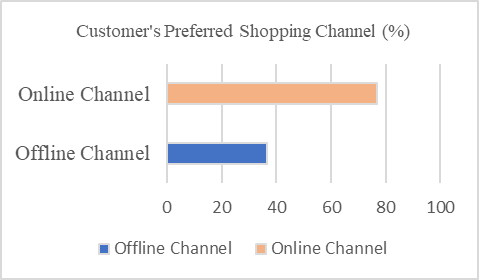
Figure 1. The percentage of customer's preferred shopping channel.
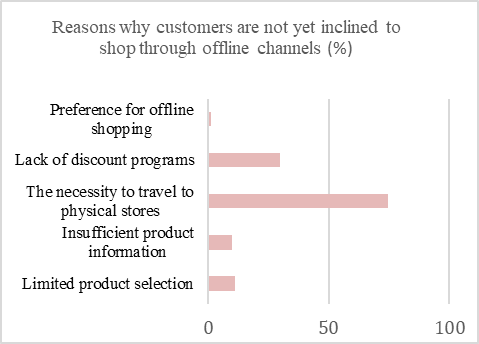
Figure 2. The percentage of reasons why customers are not yet inclined to shop through offline channels
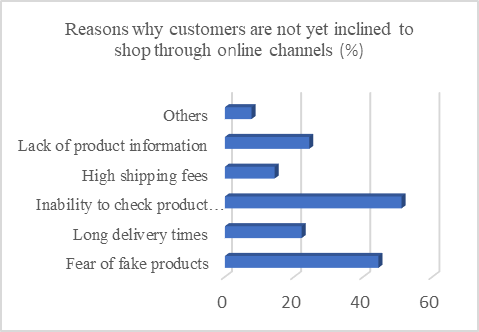
Figure 3. The percentage of reasons why customers are not yet inclined to shop through online channels
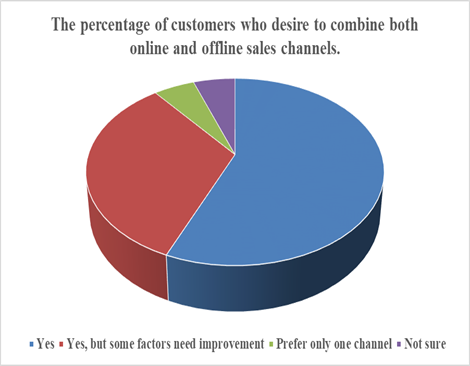
Figure 4. The percentage of customers who desire to combine both online and offline sales channels
3.7. Summary and evaluation of research findings
E-commerce has undoubtedly become an attractive option for many customers today, and convenience is the most obvious reason. Accordingly, consumers save time and can shop in the heat-of-the-moment without traffic hassle or waiting in exceptionally long queues at the stores. Flexible shopping hours is yet another silver lining. Customers can do all types of shopping during their breaks, after work, or even on weekends without thinking of any timings. All these customers today are addicted to online shopping due to a variety of products. E-commerce platforms only house a vast range of items, as it offers customers a way to get to various brands and types of products that would otherwise be limited by what store has in stock physically.
4. Conclusions
This research has examined how Perfetto Vietnam can effectively transition toward an omnichannel retail strategy to improve operational efficiency and better respond to the needs of today’s consumers. Through a comparative analysis with Tchibo’s omnichannel model and the collection of qualitative data, the study identified key challenges facing Perfetto. These include limited integration between online and offline channels, underdeveloped customer personalization capabilities, and technological constraints in managing inventory and customer data.
Although Perfetto has established a fundamental retail infrastructure, its current system lacks the level of integration and customer focus required to deliver a seamless omnichannel shopping experience. Modern customers expect a high degree of consistency across platforms, accurate inventory availability, and the ability to move effortlessly between physical and digital touchpoints. The company’s current offline-focused approach must evolve to incorporate digital tools that not only enhance customer experience but also improve agility in internal operations.
The proposed solutions in this study - such as the adoption of Click and Collect services, real-time inventory synchronization, implementation of CRM and OMS systems, and enhanced digital engagement - are grounded in practical analysis and industry benchmarks. These recommendations aim to increase customer satisfaction, foster stronger brand loyalty, and support growth across all channels. By applying these initiatives gradually and strategically, Perfetto will be able to reposition itself as a digitally competent and customer-oriented brand in the competitive coffee retail market in Vietnam.
Recommendations: First and foremost, Perfetto should initiate the integration of Click & Collect services at selected partner retail locations. Secondly, Perfetto is strongly advised to implement robust Customer Relationship Management (CRM) and Order Management System (OMS) platforms. Further investment should be directed toward enhancing the mobile application as a central customer engagement tool. Perfetto should also expand its use of social media channels such as Facebook and Zalo for real-time customer service and marketing interaction. Finally, as Perfetto expands its digital infrastructure, data security and logistics scalability must be prioritized.
Limitations: First, the research is primarily centered on a single case study of Perfetto Vietnam. While this approach enables an in-depth understanding of the company's specific challenges and opportunities. Secondly, the quantitative survey collected responses from 111 participants, which is a reasonable sample size for capturing preliminary insights into consumer behavior within Perfetto’s target market.
References:
NielsenIQ (2022). Xu hướng Omni-Shopper trong bán lẻ tại Việt Nam: Thị trường lớn chưa được khai phá. Truy cập tại https://vietnambiz.vn/xu-huong-omni-shopper-trong-ban-le-taiviet-nam-thi-truong-lon-chua-duoc-khai-pha-20221018214953416.htm.
Perfetto Vietnam (2024). Perfetto Vietnam - Nhà phân phối độc quyền các thương hiệu gia dụng cao cấp. Perfetto. Truy cập tại https://www.perfetto.com.vn
Accenture (2021). Transforming Retail with Real-Time Inventory Systems. Available at https://www.accenture.com/us-en/insights/retail/retail-data.
Berman B., Thelen S. (2018). Planning and implementing an effective omnichannel marketing program. International Journal of Retail & Distribution Management.
Chen S., Habibi M. (2023). A temporal approach to innovation management in recessionary times. Industrial Marketing Management, 109, 1-13. Available at
https://www.sciencedirect.com/science/article/pii/S0019850123001153.
Djamaludin D., Achiraeniwati E., Rejeki Y. S., Rukmana O., Muhammad C. R. (2024). Building Entrepreneurial Networks for Omnichannel Coffee Retailing in Cimenyan Sub-district: A Case Study. 6th Social and Humaniora Research Symposium, 107-117. https://doi.org/10.18502/kss.v9i24.16828.
Forrester (2022). The Impact of OMS on Retail Efficiency. Available at https://www.forrester.com/report/the-total-economic-impact-of-ordermanagement-systems/RES159057.
Jaeckel B., & Yen Y. S. (2019). How a thought-out omni-channel strategy can help the German coffee retailer to stay ahead of its competition: A case of Tchibo. International Journal of Business Management and Economic Research, 10(1), 1526-1533.
McKinsey & Company (2020). Click & Collect: Unlocking Customer Convenience. . Available at https://www.mckinsey.com/industries/retail/our-insights/click-and-collectreshaping-the-retail landscape.
Nguyen A., McClelland R., & Nguyen H. T. (2022). Omnichannel marketing: Structured review, synthesis, and future directions. The International Review of Retail, Distribution and Consumer Research, 32(1), 45–67. Available at https://doi.org/10.1080/09593969.2022.2034125
Nguyen T. T. B., & Akbari M. (2024). Unlocking the potential of Vietnamese supply chain with digitalization: A bibliometric analysis and systematic literature review. Operations and Supply Chain Management: An International Journal, 17(1), 88–105. Available at https://journal.oscmforum.org/journal/journal/download/20240327094147_Paper_8_Vol._17_No_.1,_2024_.pdf.
Phuc P. H. (2021). Omni-channel marketing as crisis management strategy: Case study on the marketing approach of the Vietnamese chain, The Coffee House in times of COVID-19. Vietnamese-German University. Available at https://epub.vgu.edu.vn/handle/dlibvgu/1243.
Sarkar Biswajit et al. (2021). A sustainable Online-to-Offline (O2O) retailing strategy for a supply chain management under controllable lead time and variable demand. Sustainability, 13, 1756. Available at https://doi.org/10.3390/su13041756.
Verhoef P. C., Kannan P. K., & Inman J. J. (2021). From Multi-channel Retailing to Omnichannel Retailing: Introduction to the Special Issue on Omnichannel Marketing and Retailing. Journal of Retailing, 97(2), 139-145.
Wei S. (2021). Analysis of marketing innovation under the new retail mode: Taking Luckin coffee as an example. E3S Web of Conferences, 235, 01074. Available at https://doi.org/10.1051/e3sconf/202123501074.
Mô hình bán lẻ đa kênh - Chiến lược phù hợp cho ngành công nghiệp bán lẻ
Đường Võ Hùng1, 3
Ngô Đức Trung1, 2, 3
1Khoa Quản lý Công nghiệp, Trường Đại học Bách khoa, Đại học Quốc gia TP.Hồ Chí Minh
2Sinh viên Khoa Quản lý Công nghiệp, Trường Đại học Bách khoa, Đại học Quốc gia TP.Hồ Chí Minh
3Đại học Quốc gia TP.Hồ Chí Minh
Tóm tắt:
Trong thời đại số ngày nay, hành vi mua hàng của khách hàng trong ngành công nghiệp bán lẻ, từ đó làm cho hệ thống bán lẻ đã thay đổi thích ứng từ chiến lược bán lẻ truyền thống sang chiến lược tích hợp, đa kênh. Do vậy, nghiên cứu này nhằm xây dựng một quy trình phát triển chiến lược bán lẻ đa kênh cả lý thuyết và triển khai thực tế, thích ứng với thị trường bán lẻ tại Việt nam. Để làm được điều này, dựa trên sự thành công của mô hình bán lẻ đa kênh của Tchibo, nghiên cứu xác định các yếu tố then chốt, gồm: tích hợp kênh liền mạch, đồng bộ hóa tồn kho theo thời gian thực, tăng cường tương tác số hóa và cá nhân hóa dựa trên dữ liệu. Kết quả nghiên cứu đã nhấn mạnh tầm quan trọng của việc liên kết hoạt động bán lẻ được điều tiết phù hợp giữa kênh trực tuyến và ngoại tuyến nhằm tối ưu hóa trải nghiệm khách hàng và thúc đẩy tăng trưởng bền vững. Ngoài ra, nghiên cứu còn cung cấp thêm những góc nhìn thực tiễn cho các hệ thống bán lẻ tại các thị trường mới nổi trong việc xây dựng chiến lược bán lẻ đa kênh hiệu quả, thích ứng linh hoạt với những thay đổi đáp ứng kỳ vọng của người tiêu dùng.
Từ khóa: chiến lược đa kênh, công nghiệp bán lẻ, bán lẻ trực tuyến và ngoại tuyến, mô hình bán lẻ đa kênh của Tchibo, cá nhân hóa dựa trên dữ liệu.
[Tạp chí Công Thương - Các kết quả nghiên cứu khoa học và ứng dụng công nghệ, Số 26/2025]