




Abstract:
The global supply chain for electronic components faces persistent challenges, including physical damage, electrostatic discharge (ESD), and limited real-time visibility during transportation. This study introduces IntelliBox, a reusable smart packaging solution that integrates Internet of Things (IoT)-based monitoring with advanced protective design. Developed to be compatible with standard ISO pallets, IntelliBox incorporates a three-layer composite housing, active expansion foam for shock absorption, and embedded sensors that monitor location, temperature, humidity, and vibration through LoRaWAN connectivity. An empirical assessment using a standard 50 kg carton demonstrates that the IntelliBox system enhances container utilization by increasing volume efficiency by 20% and weight capacity by 10%. In addition, the active protection mechanism is projected to reduce the incidence of transit-related damage to below 1%, addressing the substantial financial losses associated with ESD-related failures in global electronics logistics. Overall, the proposed solution offers a scalable, sustainable, and transparent approach to modernizing e-logistics, aligning with the technological and environmental objectives of Industry 4.0 and circular economy principles.
Keywords: Smart packaging, e-logistics, IoT monitoring, supply chain optimization, Intellibox.
1. Introduction
In a globalized economy, the logistics of high-value electronic components represent an important but vulnerable link in the supply chain. These components are characterized by extremely high sensitivity to environmental factors such as vibration, humidity, and especially Electrostatic Discharge (ESD), causing significant annual losses in the industry (Cui et al., 2023; Groezinger & Zimmermann, 2020). Although these goods are of high value, traditional supply chains often lack real-time visibility and rely on inadequate packaging, resulting in an estimated loss rate of 8% to 33% due to physical and electrostatic hazards (Lin & Lin, 2023; Trost, 1995). Therefore, the persistent existence of these risks requires urgent technical intervention to protect the integrity of the product during transportation.
The theoretical framework of this study is based on the convergence of the circular economy and Industry 4.0 technology. While traditional logistics models often follow a "produce-use-dispose" linear approach using single-use cardboard, modern sustainability principles favor reusable shipping items (RTI) to minimize waste and optimize resource efficiency (Vietnam Ministry of Industry and Trade, 2022). Furthermore, the integration of the Internet of Things (IoT) into logistics – conceptualized as "Smart Packaging" – provides the theoretical basis needed to transform passive containment into proactive, data-driven surveillance systems (Cil et al., 2022). This technological shift addresses the industry's "visibility gap" by enabling real-time monitoring of commodity conditions and predictive risk management (Eom et al., 2016).
Building on this foundation, this study aims to confirm that an integrated smart packaging solution can mitigate transport risks superior to standard methods. We propose "Intellibox", a system that combines high-strength composite materials with proactive IoT monitoring to enhance physical protection and supply chain transparency. By evaluating this system compared to traditional packaging, the study seeks to demonstrate quantifiable improvements in damage reduction, space optimization, and long-term economic efficiency (Accorsi et al., 2014).
2. Design and process flow of Intellibox
2.1. Process of using Intellibox
2.1.1. Procedure for using Intellibox
The Intellibox operating procedure is shown in Figure 1 With the proposed procedure, the ability to comprehensively monitor the status of electronic components throughout the transport journey. Saving the handover results on the system ensures the integrity and immutability of data, avoiding falsification or alteration of information, which is an essential requirement in high-value component supply chain management.
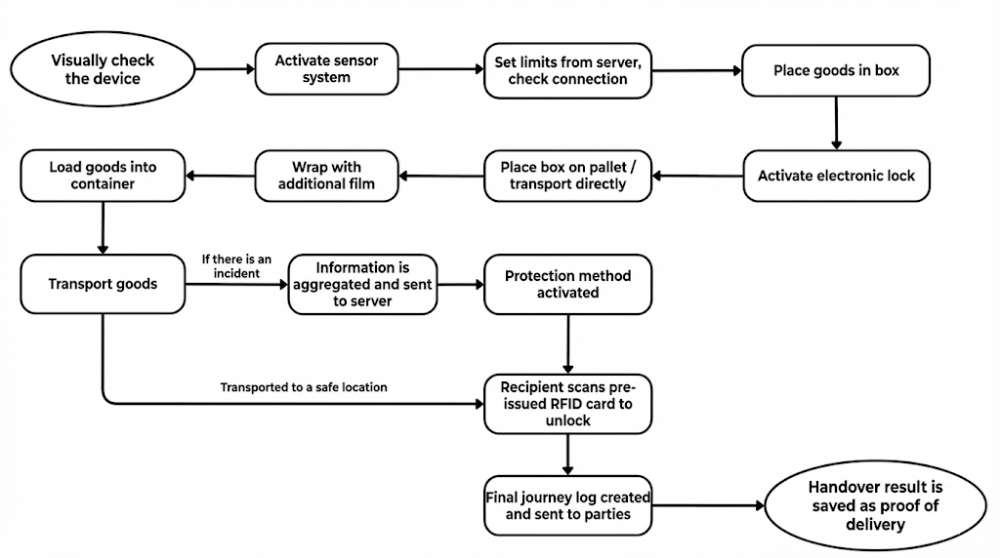
Figure 1: Intellibox Shipping Operation Process Schema
The schema of the operation process when an incident occurs is given in figure 2. The operation process ensures the protection of goods directly at the time of the incident and sends information to the system in parallel, helping businesses reduce damage and timely update the status of goods.
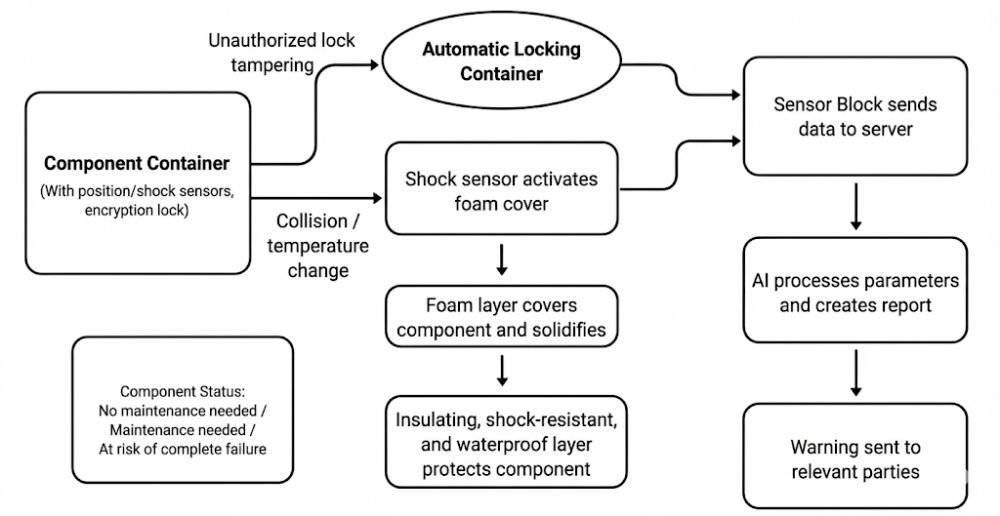
Figure 2: Intellibox Crash Operation Process Schema
2.1.2. Intellibox recall method
The Intellibox recall methodology is built on a technology-based box lifecycle management model (Lifecycle Management + IoT), combined with a complete ownership transfer mechanism to optimize costs, protect data, and improve reuse efficiency. A fully transferred ownership model is proposed to reuse Intellibox for subsequent shipments according to the capabilities of the business. This mechanism both reduces transportation and packaging costs, reduces the amount of waste, and maintains operational efficiency in the long term.
2.2. Intellibox design
2.2.1. Proposed overall structure
Intellibox is designed as a system that combines rugged physical protection and real-time environmental monitoring, aiming to minimize damage to electronic components, while enhancing supply chain traceability and visibility (Cil et al., 2022).
In terms of size, the standard version of Intellibox is designed with dimensions of 55 × 55 × 60 cm, optimized for a wide variety of medium and large electronic components, and is compatible with the majority of entry-sized storage racks, forklifts and pallets in factories. This size ratio optimizes the usable volume inside the box, reducing excess space—a factor that often increases the vibration and impact of components when moving. This helps businesses optimize storage density, reduce space costs, and increase logistics efficiency throughout the transportation chain.
In the design for Intellibox, apply Asian standard pallets to optimize the ability to stack, store and transport goods in the region. According to the analysis of international pallet sizes, the use of 1,100 × 1,100 mm pallets is advantageous because it is popular in many Asian countries and is well compatible with container systems, and helps to streamline the warehouse area (Eom et al., 2016). In addition, the synchronization with pallet standards makes the transportation and retrieval process convenient, increasing sustainable efficiency. Figure 3 will describe the overall structure in more detail.
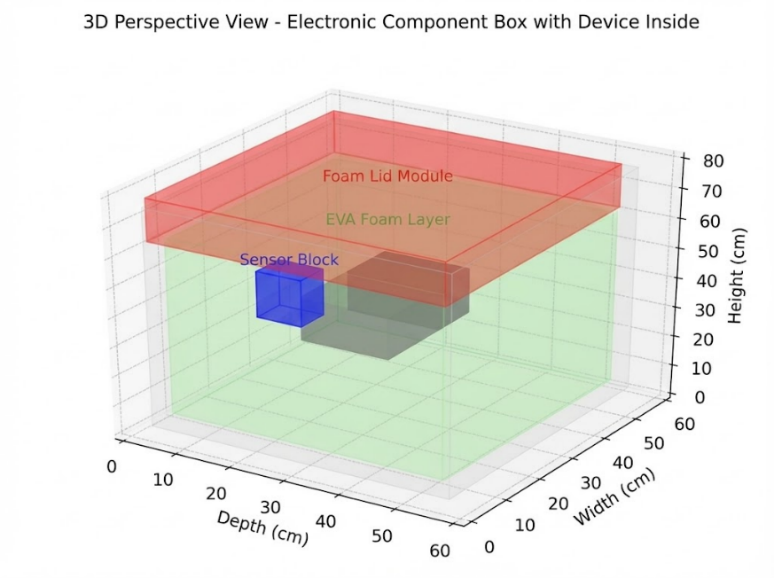
Figure 3: Intellibox 3D drawing.
2.2.2. Intellibox components
a. Outer shell parts
Intellibox's physical structure is built on the principle of total protection. The outer shell of the box is made of 3-layer composite plastic that stands out for its high bearing capacity, impact resistance and limited mechanical deformation when impacted by drops, collisions or pinches. Inside, the EVA cushion is combined with a self-absorbing compression foam layer, the design depends on the characteristics of each component. This package cushioning principle has been proven effective in distributing force evenly, reducing vibration and mechanical shock, and maximizing protection of sensitive devices (Cil et al., 2022).
In addition, the standardized size facilitates the reuse and recovery cycle, reducing the complexity of sorting, cleaning and maintenance. Standardizing the size is also in line with the lifecycle management model, which requires boxes to be easily scanned, identified, and applied to the same health management process throughout the lifecycle of the device. (Table 1)
Table 1. Box components and features
|
Materials |
Description and Application |
|
3-layer composite plastic (gray outer layer) |
Making the outer shell and sensor block; Provides mechanical strength, light weight, impact resistance, and corrosion resistance. |
|
EVA foam (green layer) |
Inner padding layer; suppresses vibration and disperses impact forces to protect components. |
|
Compression foam (upper red layer) |
The compartment is in the lid of the box; unfolds when a strong impact or temperature change is detected to create additional insulation and shock resistance. |
|
Elastic silicone (surround edges) |
Box edge wrapping; increases tightness, prevents water absorption, protects from mold and oxidation. |
b. Internal electronics
Table 2. Electronic components and functions
|
Electronic Components |
Main Functions |
|
Location sensors (based on GPS or LoRa) |
Real-time location tracking and problem location identification. |
|
Shock sensor |
Detect and record impact force, frequency, and intensity to activate protection. |
|
Temperature sensor |
Monitor the internal environment to detect changes beyond the threshold. |
|
Pin |
Provides uninterrupted power without external charging, easy to replace. |
|
LoRa Transceiver Module |
Long-range data transmission with low power consumption to the server. |
|
Microcontroller SoC |
Processing signals from sensors, synthesizing and analyzing data. |
|
RFID Technology |
Secure access control, alert when there is unauthorized interference. |
3. Results and analysis
3.1. Perfect order rate
The order damage rate due to collision and thermal change can be reduced by up to 80-95% compared with the traditional carton shipping method.
With the assumption of shipping 500 boxes and a 5% damage rate, the perfect order rate will increase as follows:
- Active protection - 80% of the additional protected goods: 500 x 5% x 80% = 20 boxes, equivalent to about 45,000-70,000 additional protected components.
- Passive protection - accounts for 20% of the additional protected goods: 500 x 5% x 20% = 5 boxes, approximately 10,000-15,000 additional protected components.
3.2. Optimal level of space and weight in containers
The results of space and weight optimization are mentioned in Table 3. From the parameters, it can be seen that the Intellibox box has a clear advantage over its direct competitor - the 50kg carton box both in terms of the ability to take advantage of the volume from the optimization of the design size and the ability to take advantage of the weight from the volume of goods and the additional load capacity, for the ability to take advantage of nearly 20% more volume and 10% more weight compared to using a standard 50kg carton box to transport goods in the same 20-foot container.
Table 3. Comparison of utilization rates of weight and volume
|
Volumetric utilization rate |
|
50kg carton box |
75kg Smart Box |
|
Maximum number of packages per trip |
160.000 |
120.000 |
|
|
Length |
600.000 |
550.000 |
|
|
Width |
400.000 |
550.000 |
|
|
Height |
400.000 |
600.000 |
|
|
Total volume of packages/trip (m3) |
15.360 |
21.780 |
|
|
Package Volume / Container Volume Ratio |
46.5% |
66.0% |
|
|
Weight utilization rate |
Gross tonnage/trip |
6352.000 |
8406.330 |
|
Cargo Weight / Container Volume Ratio |
0.225 |
0.298 |
3.3. Logistics costs saved
The cost optimization results are mentioned in Table 4. It can be seen that Intellibox optimizes logistics costs throughout the chain through the ability to increase the recycling of JEDEC trays and reduce the number of transport trips required each year thanks to the significant increase in the number of goods transported in each shipment. The Intellibox system brings the ability to optimize 7-10% of logistics costs per year for businesses, equivalent to about 1 billion VND/year.
Table 4. Cost-optimized results
|
Expense ratio |
|
50kg carton box |
75kg Smart Box |
|
Payload (kg) |
50.000 |
75.000 |
|
|
Practical Height Cargo Box |
1699.200 |
1805.400 |
|
|
Maximum number of floors |
4.000 |
3.000 |
|
|
Maximum number of packages/pallet |
16.000 |
12.000 |
|
|
Maximum number of trays transportable |
3.000 |
5.000 |
|
|
Maximum number of chips shipped/box |
1872.000 |
3120.000 |
|
|
Net Weight Box |
38.040 |
63.400 |
|
|
Maximum number of rows/pallet |
29952.000 |
37440.000 |
|
|
Maximum number of goods per trip |
299520.000 |
374400.000 |
|
|
Maximum number of trays/trip |
48.000 |
60.000 |
|
|
Gross tonnage/trip |
6342.400 |
8406.330 |
|
|
Number of trips required (Includes return shipments) |
27 |
25 |
|
|
Cost per year |
1341504000 |
1241460000 |
4. Conclusion
The Intellibox solution is proposed as a new approach to improve the effectiveness of electronic component protection and monitoring during transportation. With its compact design, reusability and reasonable cost, Intellibox can be flexibly deployed in a variety of logistics conditions without depending on strict environmental requirements or traditional surveillance infrastructure.
The integration of sensor and positioning technologies allows for real-time tracking of the status of goods, contributing to minimizing the risk of damage and loss and improving transparency in the supply chain. In addition, the orientation of using sustainable materials helps the solution to be in line with the current trend of green logistics and digital transformation.
In the early stages, Intellibox can be applied to the transportation of high-value and high-sensitivity electronic components, and serve as a basis for further studies to perfect the design, scale up the application and evaluate its effectiveness in practice.
Acknowledgement: This study was financially supported by Vietnam Maritime University under the topic code SV25-26.181.
REFERENCES:
Accorsi, R., Baruffaldi, G., & Manzini, R. (2014). A closed-loop packaging logistics model to reduce environmental impact. Journal of Cleaner Production, 82, 1–11. Available at https://doi.org/10.1016/j.jclepro.2014.06.091
Cil, A. Y., Abdurahman, D., & Cil, I. (2022). Internet of Things enabled real-time cold chain monitoring in a container port. Journal of Shipping and Trade, 7(1), Article 9. Available at https://doi.org/10.1186/s41072-022-00110-z
Cui, H., Tian, W., Xu, H., Wang, H., Huang, J., Peng, C., & Chen, Z. (2023). The reliability of complex components under temperature cycling, random vibration, and combined loading for airborne applications. Crystals, 13(3), 473. Available at https://doi.org/10.3390/cryst13030473
Eom, D., Lee, H., & Ahn, D. (2016). An analysis of the multiplicity of an international standard: The case of ISO pallet sizes. International Journal of Services and Standards, 11(3), 275–299. Available at https://doi.org/10.1504/IJSS.2016.080049
Groezinger, T., & Zimmermann, A. (2020). Reliability study of electronic components on board-level packages encapsulated by thermoset injection molding. Journal of Manufacturing and Materials Processing, 4(1), 26. Available at https://doi.org/10.3390/jmmp4010026
Lin, C.-C., & Lin, C.-Y. (2023). ESD research of SCR devices under harsh environments. Materials, 16(18), 6182. Available at https://doi.org/10.3390/ma16186182
Trost, T. (1995). Electrostatic Discharge (ESD) – Facts and Faults: A Review. Packaging Technology and Science, 8(4), 231–247.
Vietnam's Ministry of Industry and Trade (2022). Vietnam Logistics Report 2022 [in Vietnamese]. Hanoi.
INTELLIBOX: THÙNG VẬN CHUYỂN AN TOÀN CHO LINH KIỆN ĐIỆN TỬ
Nguyễn Quỳnh Trang1
Đặng Thu Thảo1
Phạm Văn Đạt1
Phạm Hồng Minh1
Phạm Nguyễn Hải Lâm1
Nguyễn Minh Đức2
1Viện Đào tạo Quốc tế, Trường Đại học Hàng hải Việt Nam
2 Khoa Kinh tế Trường đại học Hàng hải Việt Nam
Tóm tắt:
Chuỗi cung ứng linh kiện điện tử toàn cầu đang gặp nhiều thách thức do hư hỏng vật lý, phóng tĩnh điện (ESD) và thiếu khả năng giám sát theo thời gian thực. Nghiên cứu này giới thiệu “Intellibox”, một giải pháp bao bì thông minh có thể tái sử dụng, tích hợp giám sát Internet vạn vật (IoT) với hệ thống bảo vệ tổng hợp. Được thiết kế phù hợp với các pallet tiêu chuẩn ISO, Intellibox sử dụng kết cấu vỏ composite ba lớp, lớp bọt giãn nở chủ động hấp thụ va đập, cùng các cảm biến theo dõi vị trí, nhiệt độ, độ ẩm và rung động thông qua LoRaWAN. Đánh giá thực nghiệm trên thùng carton tiêu chuẩn 50 kg cho thấy Intellibox tối ưu hóa thể tích container 20% và tăng khả năng chịu tải 10%. Hệ thống bảo vệ chủ động được dự đoán có thể giảm tỷ lệ hư hỏng trong quá trình vận chuyển xuống dưới 1% và giảm thiểu các rủi ro ESD. Giải pháp này cung cấp một cách tiếp cận có khả năng mở rộng, bền vững và minh bạch cho hiện đại hóa logistics điện tử, phù hợp với Công nghiệp 4.0 và kinh tế tuần hoàn.
Từ khóa: bao bì thông minh, logistics điện tử, giám sát IoT, tối ưu hóa chuỗi cung ứng, Intellibox.
[Tạp chí Công Thương - Các kết quả nghiên cứu khoa học và ứng dụng công nghệ, Số 4/2026]