





Abstract:
This article offers a structured comparative analysis of the world’s two dominant legal traditions-civil law and common law-by tracing their historical evolution, foundational sources, and institutional logics. It highlights how Roman legal science and codification shaped the civil law tradition, while judicial precedent and the authority of the King’s courts grounded the development of common law. The study emphasises the divergent yet increasingly convergent trajectories of both traditions under modern legal globalisation. By synthesising doctrinal, historical, and methodological insights, the article provides a clear conceptual framework for understanding how each tradition constructs legal authority and resolves disputes. The analysis contributes to comparative legal scholarship by clarifying the enduring influence and contemporary relevance of these traditions in shaping national legal systems.
Keywords: legal traditions, legal systems, common law, civil law, legal approaches, comparative legal studies.
1. Introduction
Gaining a better understanding of history promises to advance our knowledge regarding why and how the law has evolved. Indeed, the further back into the past the study goes, the more the validity of legal achievements is found because the greater length of the investigation will give us a more understanding of law developments.
What is the legal tradition? In my comprehension, “legal tradition” is a broader term than the “legal system”. It implies many legal systems, like a family name of people who have the same ancestors. Legal systems called by a common name like “civil law” systems or “common law” systems or other names share a distinctive heritage with other legal systems called by other common names. Within one legal tradition, legal systems have common characters because they inherit the same heritage. For example, the tradition of the civil law is characterized by a particular interaction in its early formative period among Roman law, Germanic and local customs, canon law, the international law merchant, and, later, by a distinctive response to the break with feudalism and the rise of states.1
There are many different legal traditions in the world, for example, civil legal tradition, common legal tradition, Islamic legal tradition, Hindu legal tradition, Talmudic legal tradition, and so on. However, civil and common legal traditions are the two major ones. This is affirmed by the fact that many parties opt for their agreements to be governed by common law and civil law. English common law is the most widely-used legal system, covering 27% of the world’s 320 legal jurisdictions.2 English common law is also by some distance the most widely-used foreign law in fast-growing Asian markets.3 American common law is used by around 20% of the world’s jurisdictions.4
The third widely-used legal system is Roman-Germanic or civil legal tradition, covering 10% of the world’s jurisdictions.
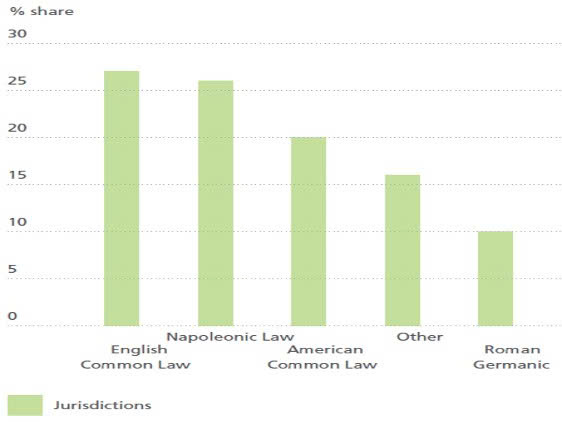

Figure 1. Comparison of global legal systems5
Civil law and common law share many similarities, even there are differences. For example, the basic sense of justice has been commonly shared.6 Furthermore, the legal system itself started from the systematization of dispute resolution procedures in both systems.7 In this part, we are going to see how they differ and resemble in detail.
2. Civil law tradition
Things began to happen in Rome, which were identifiable as legal, but no civil code was written. Everything was simple at the first stage.8 There was a lot of internal debate in Rome between those of high rank and those of lower rank. Eventually, they tried to placate people by writing down on tablets some very elementary principles of how to resolve disputes.9 The Twelve Tables (around 450 BC) are often seen as the beginning of Roman law, but they were really just a peace-making endeavor.10 Roman law thus found its origins in advice concerning particular cases or disputes. The law which emerged looks very much like life.11
The Romans took their law with them all over Europe.12 When the Romans were eventually driven out, Roman law was off the European territorial map for centuries, except for some of its versions in Italy and the south of France. When Roman law was re-discovered in the eleventh century,13 it became substantively adequate to deal with an entire range of social problems and continued to expand by its established positions in universities.14
Thousands of students who came to the Italian law faculties15 from every corner of Europe carried back to their own nations and universities the methods and ideas of Roman law as “torch bearers” of the new legal science,16 furnished the common methodology for the further development of national laws. The Roman civil law, together with the immense literature generated by commentators, came to be the jus commune or ius commune, the common law of Europe as a common legal language and a common method of teaching and scholarship.17
At this time, there were no strong centralized political administrations, no unified legal systems, and no any code.18 From the fifteenth century onwards, the position of jus commune began to be affected by the rise of legal nationalism and political power centralization. Eventually, it was displaced as the basic source of law after the introduction of national civil codes.19
The first national code appeared in the Scandinavian countries in the seventeenth and eighteenth centuries.20 However, the 1804 French Civil Code (under Napoleon) was more complete, systemic, and was claimed as the world’s first modern code.21 The 1900 German Civil Code was a very logical construction and advanced systemic legal thought. Then all of Europe, including Eastern Europe and Russia, had to have their codes. The 1804 French Civil Code and the 1900 German Civil Code have served as models for most other modern civil codes.22 They have both decisively affected the shape of civil law systems today.23 Just as ancient Roman law was once introduced into the conquered territories, the French Civil Code was brought by Napoleon conquests and then French colonialism to colonies in Europe, Africa, Asia, Oceania, Caribbean islands.24 Although the German Civil Code as a whole was not built to travel, the legal science that preceded and accompanied it has had an important influence on legal theory and doctrine in other countries.25
From the beginning, judges relied heavily on legal scholars for information and guidance. By the year 1600, judges normally sent out the record of a difficult case to a university law faculty and adopted the faculty’s collective opinion on questions of law.26 This practice continued until the nineteenth century, resulted in the accumulation of an extensive body of common doctrine, reports, and essays. Scholarly opinions rendered in actual controversies became a kind of case-law.27 Therefore, it is true to say that the civil law system has been and still is based on the research activities of legal scholars in universities, then additionally has been based on codified law systems as a product of the constitutions of states in Europe.28 Academic writers have a role in explaining the general principles of legislative texts, and they involve in the process of law-making. Even today, legal academics still play important roles despite the legal practice becoming much more important than before and gathering much attention in societies.29
The world now recognises widely some features of the civil law tradition. First of all, as to the sources of law, the primary sources in all civil law systems are enacted law and custom, with the former overwhelmingly more important.30 Sometimes “general principles of law” are also considered a primary source. The secondary sources may have weight when primary sources are absent, unclear, or incomplete, but they are never binding, and they are neither necessary nor sufficient as the basis for a judicial decision. Case law and the writings of legal scholars are such secondary sources.31 Civil law theory does not recognise the existence of a formal doctrine of “stare decisis”,32 (stare decisis applies in common law systems to require a lower court to follow the decision of a higher court).33 Hence, it is adequate to comment that civil law tradition also uses case law to supplement enacted law and custom. Secondly, codification is the easily noticed feature of a civil law system.34 Codification creates an expectation that all branches of the law will be presented in a systematic form.35 Because of this systematic form, codification requires interpretation with the sense of searching for the truest meaning.
3. Common law tradition
The term “common law” is used in different senses. It can mean the law which is “common” across a country applied by its court system. On the other hand, it is often used in its narrowest sense to refer to the law found in decisions of courts which existed in England from the early middle ages until the late nineteenth century, the King’s courts,36 as contrasted with the law found in legislative enactments. The “common law” is judge-made law and has no origin in any legislative enactment.37 (Of course, there are many areas of English law that its rules are contained wholly or mainly in legislation. For example, much of company law has now been taken over by statute).
We will study the history of the common law tradition. As R. C. Van Caenegem38 has concluded that the best explanation for the existence of the common law tradition is the historical accident, or chance, of the military conquest of England in 1066 by the Normans. The only avenue for a Norman legal order was through a loyal judiciary. This immediately marks off a common law tradition from all others. The Normans noticed that a country could be conquered militarily, but it was not easy to govern militarily. So they incorporated the local jury into the working of their new, modern, royal courts. Then the common law grew through the accumulation of precedent, and it expanded throughout much of the world as a result of the British Empire. English technique generally involved a more hands-off approach, leaving existing law for existing people, new laws for new people. At this point, the common law tradition differs from the civil law tradition which tends to try keeping the original code for new lands.
Common law systems around the world have drawn their legal system from England,39 typically in the context of having been British colonies, such countries as Australia, Canada (except Quebec, which has a civil law code: it was a French colony before it passed to the British crown in 1763), India, the Republic of Ireland, Hong Kong, New Zealand, Singapore and the states within the United States of America except for Louisiana (which has a civil law code. Spain and France held it before it was passed to the United States in 1803).40 Other countries have received the common law only in part and are generally referred to as “mixed” jurisdictions-such as Scotland and South Africa. Although, from its origins in Southern England, the common law became the principal basis of the procedure and substance of the legal systems for nearly a third of the world’s population. It is inappropriate to suggest that English law exists in the United States, Indian, or Commonwealth countries. English law applies only in England and in increasingly modified form in Wales.41 For example, there is no general principle of good faith in the English law of contract, but the courts in the United States and Australia have gone much further than the English courts in accepting a significant role for the requirement of good faith between contracting parties in particular contexts, especially a duty of good faith in the performance of a contract.
When talking about the origin of the common law tradition, we find the involvement of courts - King’s courts - in England. It will be clearer to distinguish the King’s courts and others, or in other words, to distinguish the common law and equity. The “common law” is different from “equity” - the law which can be found in the decisions of courts under the control of the King’s Chancellor (known as the Chancery Courts, or the Courts of Equity) and developed from the late fourteenth or early fifteenth century (after the King’s courts of common law were already established) until the late nineteenth century. This distinction between “common law” and “equity” is discussed further below.42
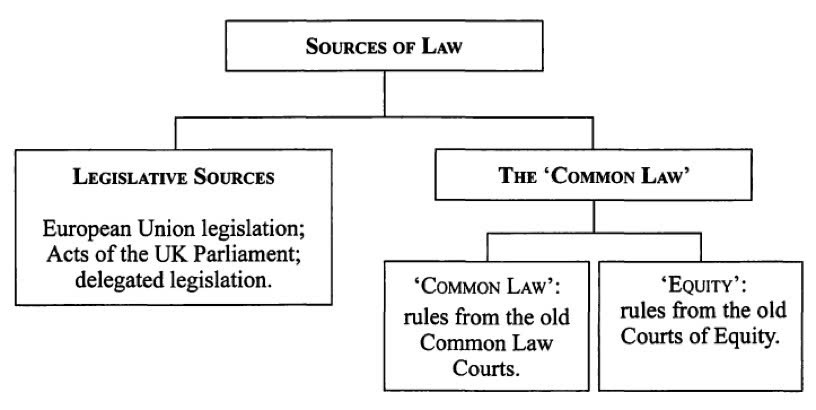
Figure 2. The relationship between the common law and equity
During the fifteenth and sixteenth centuries, the Chancellor decided cases according to what “equity” required as a decision of “conscience”, which based on the Chancellor’s discretion. He had no legal rules to follow. Over the years and centuries, the Courts of Equity developed principles and rules by reference to which they would grant remedies-just as much as the common law courts applied the legal rules which had been developed over the years by the common law judges. Although the courts were fused into a single new court structure in the late nineteenth century, the reform of the courts did not itself reform the rules of common law and equity. These separate “streams” of rules-common law and equity-continue to be developed by the courts in modern law. The rules of modern law can often be understood by reference to their origins in the common law or in equity. Today, in England and Wales, there are still three divisions at the High Court of Justice, namely Chancery Division (hearing cases involving business and property disputes, including intellectual property claims, estates, etc.), the Queen’s (or King’s) Bench Division (hearing cases involving contract, tort, etc.), and the Family Division.43 Besides, there is reliable information that they are thinking of changing this structure of three divisions to merge the Chancery Division and the Queen’s (or King’s) Bench. Hence, the current structure may be changed in the near future. Furthermore, it is also necessary for any study of the law of contract to understand the relationship between contract and tort. Tort law is the area of law that covers most civil suits. Generally, every claim that arises in civil court, with the exception of contractual disputes, falls under tort law.
Developed slightly later but in almost the same period of time with civil law tradition, the English legal system was not a direct reception of Roman law. However, there has been an indirect effect on the development of the early English legal system from Roman law, principally from the area of canon law. Some Chancellors were educated at Oxford and Cambridge with the study of civil law, and judges had considered Roman doctrines when difficult questions were presented and there was no direct, traditional source of English law as a guide.44 However, we should not say that there has been a reception of Roman law. Reception means a direct acceptance of Roman law as a principal source of law.45 All legal systems tend to benefit from others, particularly as comparative legal study becomes prevalent.
For centuries English precedent not only existed as law, as it continues today, but it existed as the primary source of law, giving way partially only to legislative enactments of Parliament after the civil war (1642-1651), and later being overshadowed by legislation as a source of social reform in the mid-19th century.46 Parliament may enact unwise laws which the courts nevertheless in theory are bound to apply. However, the role of the Human Rights Act 1998 has provided the courts with the ability to issue “declarations of incompatibility” where statutes are inconsistent with certain human rights.47 Sources of law in common law systems derive mainly from precedents, a small portion from the legislation of Parliament and delegated legislation of the chairperson of governments like a Minister or a President (in England, from 2021, after Brexit EU law will not be a source of law). In England, it is rare to find legislation on general rules of contract law, and contract theory is derived from case law.48,49
The significance of case law as a source of law places the court at the centre of the law-making process. As a consequence, the role of judges is significant to the point where judges of higher courts have a high status within the legal system. In addition, academic writing is not so significant. Less reliance has traditionally been placed on academic writers. A common law judge will generally give a detailed exposition of his reasoning, not only by interpretation of legislative texts but in the development of the rules of the common law. His power to develop the law is limited to relevant points of law which arise in the case.
References:
1 Marry and Glendon, Carozza, P., Picker, C. (2016). Comparative Legal Traditions in a Nutshell. 4th Edition. The USA: West Academic Publishing, p21.
2 Legal excellence, internationally renowned: The UK legal services 2019, p41, available at https://www.thecityuk.com/research/legal-excellence-internationally-renowned-uk-legal-services-2019/, accessed 22 November 2025.
3 Ibid.
4 Ibid.
5 Ibid.
6 Saito, A. (2008). Legal Education for Value Creative Business Lawyers: A Multidisciplinary Perspective Towards Globalising Market Societies. CDAMS (Centre for Legal Dynamics of Advanced Market Societies, Kobe University): Legal Dynamics Series, LexisNexis, p133.
7 Ibid.
8 Glenn, H. P. (2014). Legal Traditions of the World. Fifth Edition. New York: Oxford University Press, p133-134.
9 Ibid, p134.
10 Ibid.
11 Ibid, p136.
12 Ibid, p139.
13 Glenn, H. P. (2014). Legal Traditions of the World. Fifth Edition. New York: Oxford University Press, p139.
14 Ibid, p145.
15 It was started in the University of Bologna (Italy) under the Roman Empire. The University considered the first university in Europe, and was the prototype of universities in the world.
16 Marry and Glendon, Carozza, P., Picker, C. (2016). Comparative Legal Traditions in a Nutshell. 4th Edition. The USA: West Academic Publishing, p29-30.
17 Ibid, p30.
18 Ibid, p34.
19 Ibid, p36-37.
20 Ibid, p36.
21 Marry and Glendon, Carozza, P., Picker, C. (2016). Comparative Legal Traditions in a Nutshell. 4th Edition. The USA: West Academic Publishing, p38.
22 Ibid, p37.
23 Ibid.
24 Ibid, p49.
25 Ibid, p51.
26 Ibid, p34.
27 Ibid.
28 Saito, A. (2008). Legal Education for Value Creative Business Lawyers: A Multidisciplinary Perspective Towards Globalising Market Societies. CDAMS (Centre for Legal Dynamics of Advanced Market Societies, Kobe University): Legal Dynamics Series, LexisNexis, p133.
29 Ibid.
30 Marry and Glendon, Carozza, P., Picker, C. (2016). Comparative Legal Traditions in a Nutshell. 4th Edition. The USA: West Academic Publishing, p147.
31 Ibid.
32 Ibid, p155.
33 Ibid, p158.
34 Glenn, H. P. (2014). Legal Traditions of the World. Fifth Edition. New York: Oxford University Press, p133.
35 Harris, D., Tallon, D. (1989). Contract Law Today. Oxford: Clarendon Press, p16.
36 Cartwright, J. (2013). Contract Law - An Introduction to the English Law of Contract for the Civil Lawyer. Second Edition. Oxford and Portland, Oregon: Hart Publishing, p3.
37 Ibid, p4.
38 Raoul Charles, Baron Van Caenegem (14 July 1927 – 15 June 2018), was a Belgian historian and noted expert in the field of European legal history. https://en.wikipedia.org/wiki/Raoul_Van_Caenegem
39 Cartwright, J. (2013). Contract Law - An Introduction to the English Law of Contract for the Civil Lawyer. Second Edition. Oxford and Portland, Oregon: Hart Publishing, p9.
40 Ibid.
41 Marry and Glendon, Carozza, P., Picker, C. (2016). Comparative Legal Traditions in a Nutshell. 4th Edition. The USA: West Academic Publishing, p195.
42 Cartwright, J. (2013). Contract Law - An Introduction to the English Law of Contract for the Civil Lawyer. Second Edition. Oxford and Portland, Oregon: Hart Publishing, p4.
43 High Court of Justice, England and Wales, https://www.britannica.com/topic/High-Court-of-Justice-British-law, accessed 22 November 2025.
44 Marry and Glendon, Carozza, P., Picker, C. (2016). Comparative Legal Traditions in a Nutshell. 4th Edition. The USA: West Academic Publishing, p330.
45 Ibid, p331.
46 Ibid, p303.
47 Ibid, p315.
48 Harris, D., Tallon, D. (1989). Contract Law Today. Oxford: Clarendon Press, p389.
49 Cartwright, J. (2013). Contract Law - An Introduction to the English Law of Contract for the Civil Lawyer. Second Edition. Oxford and Portland, Oregon: Hart Publishing, p4.
References:
[1] Marry and Glendon, Carozza, P., Picker, C. (2016). Comparative Legal Traditions in a Nutshell. 4th Edition. The USA: West Academic Publishing.
[2] Legal excellence, internationally renowned: The UK legal services 2019, p41, available at https://www.thecityuk.com/research/legal-excellence-internationally-renowned-uk-legal-services-2019/, accessed 22 November 2025.
[3] Saito, A. (2008). Legal Education for Value Creative Business Lawyers: A Multidisciplinary Perspective Towards Globalising Market Societies. CDAMS (Centre for Legal Dynamics of Advanced Market Societies, Kobe University): Legal Dynamics Series, LexisNexis, p133.
[4] Glenn, H. P. (2014). Legal Traditions of the World. Fifth Edition. New York: Oxford University Press, p133-134.
[5] Marry and Glendon, Carozza, P., Picker, C. (2016). Comparative Legal Traditions in a Nutshell. 4th Edition. The USA: West Academic Publishing, p29-30.
[6] Harris, D., Tallon, D. (1989). Contract Law Today. Oxford: Clarendon Press, p16.
[7] Cartwright, J. (2013). Contract Law - An Introduction to the English Law of Contract for the Civil Lawyer. Second Edition. Oxford and Portland, Oregon: Hart Publishing, p3.
Received date: september 10, 2025
Reviewed date: september 14, 2025
Accepted date: october 3, 2025
HAI TRUYỀN THỐNG PHÁP LUẬT CHỦ YẾU TRÊN THẾ GIỚI:
NỀN TẢNG LỊCH SỬ VÀ CÁC ĐẶC TRƯNG SO SÁNHĐẶNG VĂN QUÂN
Tiến sĩ, Giảng viên, Trường Đại học Luật, Đại học Quốc gia Hà NộiTóm tắt:
Bài viết phân tích so sánh có cấu trúc về hai truyền thống pháp luật chủ đạo trên thế giới, gồm Dân luật và Thông luật, thông qua việc truy nguyên quá trình hình thành, các nguồn gốc pháp lý nền tảng và logic thể chế của chúng. Nghiên cứu làm nổi bật cách khoa học pháp lý La Mã và hệ thống hóa pháp luật đã định hình truyền thống Dân luật, trong khi án lệ tư pháp và thẩm quyền của các tòa án Hoàng gia đặt nền móng cho sự phát triển của Thông luật. Công trình nhấn mạnh những quỹ đạo phát triển khác biệt nhưng ngày càng hội tụ của hai truyền thống này trong bối cảnh toàn cầu hóa pháp lý hiện đại. Bằng việc tổng hợp các tri thức học thuyết, lịch sử và phương pháp luận, bài viết xây dựng một khuôn khổ khái niệm rõ ràng nhằm lý giải cách mỗi truyền thống kiến tạo thẩm quyền pháp lý và giải quyết tranh chấp. Phân tích này đóng góp cho lĩnh vực luật học so sánh thông qua việc làm sáng tỏ ảnh hưởng bền vững và giá trị đương đại của các truyền thống pháp luật này đối với sự định hình của các hệ thống pháp luật quốc gia.Từ khóa: truyền thống pháp lý, hệ thống pháp luật, Thông luật, Dân luật, tiếp cận pháp lý, luật học so sánh.
[Tạp chí Công Thương - Các kết quả nghiên cứu khoa học và ứng dụng công nghệ, Số 3/2026]



![[Emagazine] Đằng sau bức tranh nhập siêu 9 tháng: Những chuyển động nào đang diễn ra?](https://imgcdn.tapchicongthuong.vn/thumb/540x335/tcct-media/26/10/12/nhapsieu_6acc562168696.jpg)