




Abstract:
This study applies the Gravity Model of trade to examine the key determinants of Vietnam’s shrimp exports to France from 2012 to 2024. Using a panel dataset of 274 quarterly observations across six major EU markets, the analysis estimates the effects of economic mass, geographical distance, and critical policy and shock variables. The model is estimated via the Feasible Generalized Least Squares (FGLS) method to correct for heteroskedasticity and autocorrelation. Findings indicate that although economic fundamentals are strong, Vietnam's shrimp export potential to France is significantly constrained by high logistics costs and regulatory compliance challenges. To capitalize on the opportunities presented by the EVFTA, the study underscores a dual approach: the Vietnamese government should prioritize resolving the IUU yellow card issue and enhancing trade facilitation, while exporting enterprises should invest in international sustainability certifications and develop targeted branding strategies to access high-value segments of the French market.
Keywords: gravity model, shrimp export, France, EVFTA, IUU yellow card, COVID-19.
1. Introduction
The shrimp sector is vital to Vietnam's economy, serving as a primary export commodity and a key contributor to national export turnover and employment. As one of the world's leading shrimp exporters, Vietnam's continued growth depends on accessing and sustaining high-value markets, particularly in the European Union (EU) (Tran Trung Hieu & Pham Thi Thanh Thuy, 2010).
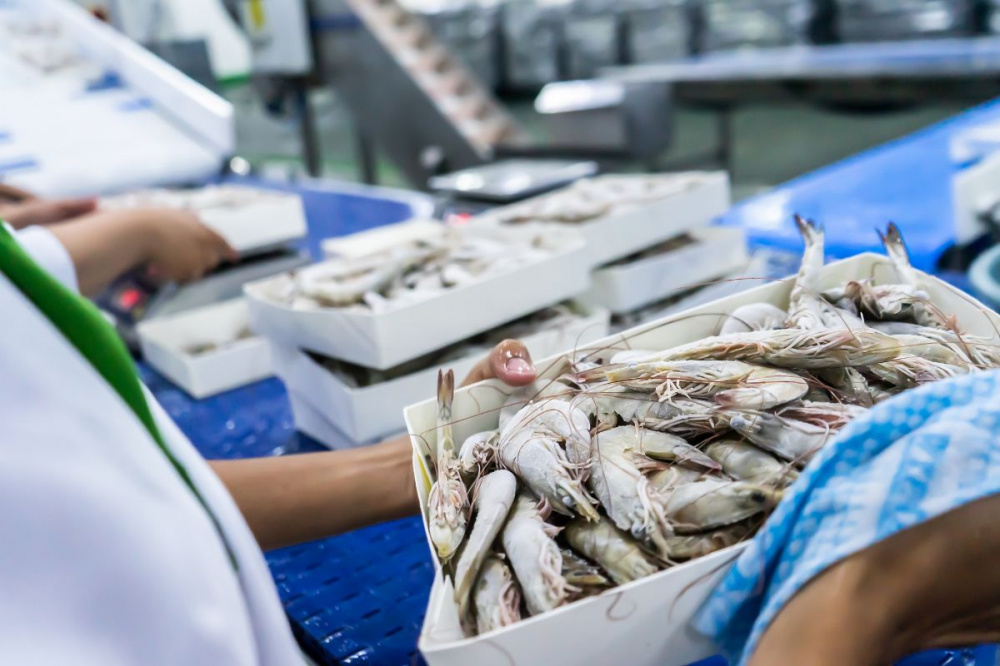
Within the EU, France stands out as a major and strategic destination for Vietnamese shrimp, characterized by significant import demand and a role as a gateway to the wider European market. However, this opportunity is coupled with considerable challenges, including strict non-tariff barriers related to sustainability and food safety, the ongoing impact of the EU's IUU (Illegal, Unreported, and Unregulated fishing) yellow card, and the complex implications of the EU-Vietnam Free Trade Agreement (EVFTA) (Nguyen Thi Tho, 2022).
While prior research has examined Vietnam's trade flows using gravity models (e.g., Tran Trung Hieu & Pham Thi Thanh Thuy, 2010), few studies have applied this framework specifically to the shrimp industry or the French market. This gap limits the availability of targeted, evidence-based insights for businesses and policymakers navigating this crucial trade relationship.
To address this, this study employs the Gravity Model to quantitatively analyze the determinants of Vietnam's shrimp exports to France from 2012 to 2024. It investigates the roles of core economic factors (GDP, distance, population) and critically evaluates the impacts of recent structural shifts: the EVFTA, the IUU yellow card, and the COVID-19 pandemic.
The findings aim to provide a nuanced understanding of this bilateral trade dynamic, offering concrete recommendations to enhance market access, comply with regulations, and leverage trade agreements, thereby supporting the sustainable growth of Vietnam's shrimp exports.
2. Literature review and theoretical framework
2.1. The Gravity Model of Trade
The Gravity Model, analogous to Newton's law of universal gravitation, is a cornerstone of empirical international trade analysis. Its foundational premise posits that bilateral trade flows are positively related to the economic mass (typically GDP) of the trading partners and negatively related to the distance between them (Tinbergen, 1962). Subsequent theoretical work by Anderson (1979) and Bergstrand (1985) provided robust microeconomic foundations, solidifying its status as the workhorse model for estimating trade determinants. Its flexibility allows for the incorporation of additional variables, such as population, trade agreements, and policy shocks, to capture both economic and non-economic factors affecting trade.
2.2. Empirical applications in relevant contexts
The Gravity Model has been extensively applied to analyze Vietnam's trade dynamics. Early applications, such as Tran Trung Hieu and Pham Thi Thanh Thuy (2010), confirmed the positive roles of GDP and free trade agreements on Vietnam's aggregate exports. Focusing on the EU market, Nguyen Thi Tho (2022) highlighted the EVFTA's positive yet heterogeneous impact across sectors. Most pertinent to this study, Le Thi Kim Chung et al. (2024) applied the model to Vietnam's seafood exports to the EU, finding significant effects of economic size and distance, while noting the limited short-term impact of the EVFTA and the negative influence of the IUU yellow card.
2.3. Identified research gap
While the aforementioned studies provide valuable insights, a distinct gap remains. Research has either focused on aggregate trade flows (Tran Trung Hieu & Pham Thi Thanh Thuy, 2010), broad sectoral analysis (Le Thi Kim Chung et al., 2024), or general agreement impacts (Nguyen Thi Tho, 2022). None have conducted a focused, quantitative examination of a key export commodity (shrimp) within a specific, high-value market (France), particularly while concurrently evaluating the roles of the EVFTA, the IUU yellow card, and the COVID-19 pandemic. This study aims to fill this gap by applying a refined gravity model to deliver nuanced, actionable insights for the Vietnamese shrimp industry targeting the French market.
2.4. Research gaps and hypotheses
Despite existing literature, key gaps remain regarding Vietnam's shrimp exports to France. Previous studies have either examined aggregate seafood trade (Le Thi Kim Chung et al., 2024) or general merchandise flows (Tran Trung Hieu & Pham Thi Thanh Thuy, 2010), lacking focus on a specific product-market pair. Furthermore, while the EVFTA's positive general impact is acknowledged (Nguyen Thi Tho, 2022), its specific effect on shrimp exports to France - amidst non-tariff barriers like the IUU yellow card, is not yet quantified. Additionally, the influences of the COVID-19 pandemic and evolving sustainable consumption trends in France on this trade flow are underexplored.
To address these gaps, this study applies the gravity model to Vietnam's shrimp exports to France (2012-2024), incorporating both economic fundamentals and critical policy/event variables. The following hypotheses are formulated for testing:
H₁: The GDP of Vietnam and France positively impacts shrimp export turnover.
H₂: Geographical distance between Vietnam and France negatively impacts shrimp export turnover.
H₃: France's population size positively impacts shrimp export turnover.
H₄: The EVFTA has a positive impact on shrimp export turnover.
H₅: The IUU yellow card has a negative impact on shrimp export turnover.
H₆: The COVID-19 pandemic has a negative impact on shrimp export turnover.
These hypotheses will be tested using panel data regression techniques (POLS, FEM, REM, GLS) to ensure robust estimations.
3. Data and research methods
3.1. Model specification: The Gravity Model
The core analytical framework is the Gravity Model of trade (Bergstrand, 1985). The empirical model is specified in log-linear form as follows:
ln(EX_ijt) = β₀ + β₁ln(Y_it) + β₂ln(Y_jt) + β₃ln(DIS_ij) + β₄ln(POP_jt) + β₅EVFTA_t + β₆IUU_t + β₇COVID_t + u_ijt
Where:
ln(EX_ijt): Natural logarithm of Vietnam's shrimp export value (in million USD) to partner country (j) in period (t).
ln(Y_it) and ln(Y_jt): Logarithms of Vietnam's and the partner country's GDP (in billion USD), representing economic mass.
ln(DIS_ij): Logarithm of geographical distance (in Km) from Hanoi to the partner's capital, a proxy for trade costs.
ln(POP_jt): Logarithm of the partner country's population (in millions), representing market size.
EVFTA_t: Dummy variable, equals 1 for periods from the third quarter of 2020 onwards, and 0 otherwise.
IUU_t: Dummy variable, equals 1 for periods from 2017 onwards, and 0 otherwise.
COVID_t: Dummy variable, equals 1 for the years 2020 and 2021, and 0 otherwise.
u_ijt: Error term.
The inclusion of dummy variables follows the approach of Le Thi Kim Chung et al. (2024) to capture structural impacts of specific policies and events.
3.2. Data and sample
To ensure robust estimation and generalizability, the model is estimated using a balanced panel dataset of Vietnam's shrimp exports to six major EU markets (France, Germany, the Netherlands, Spain, Italy, Belgium) from 2012 to 2024. This multi-country approach increases the degrees of freedom and allows for the identification of common trade determinants. The derived coefficients are then used to analyze the specific case of France in detail.
Data Sources: Export value data (EX_ijt) is sourced from Eurostat and Vietnam Customs. GDP (Y_it, Y_jt) and Population (POP_jt) data are from the World Bank and Eurostat. Distance (DIS_ij) is calculated using Freemaptools.com.
Data Frequency and Processing: Data are collected at the quarterly frequency. Monetary values are converted to USD. All continuous variables are transformed into natural logarithms. For the export value data, approximately 5% of observations (14/288) were missing, primarily in smaller markets during specific quarters. These were handled via listwise deletion, resulting in a final sample of 274 observations sufficient for panel regression analysis.
3.3. Estimation strategy
The analysis follows a structured econometric procedure to ensure reliable results:
Preliminary Models: Three standard panel estimators are employed for comparison:
Pooled Ordinary Least Squares (POLS).
Fixed Effects Model (FEM).
Random Effects Model (REM).
Model Selection: The Breusch-Pagan Lagrange Multiplier test is used to choose between POLS and panel models (FEM/REM). Subsequently, the Hausman test guides the choice between FEM and REM.
Diagnostic Testing & Final Estimation: The preferred model from step 2 is tested for heteroskedasticity (Breusch-Pagan test) and autocorrelation (Wooldridge test). If these issues are detected, Feasible Generalized Least Squares (FGLS) is employed as the final estimator to produce efficient and consistent coefficients. All analyses are conducted using Stata 17.
4. Research results and discussion
4.1. Overview of Vietnam's shrimp exports to France
Vietnam's shrimp exports to France (2012-2024) have experienced volatile growth, shaped by global economics, trade policies, and non-tariff barriers. Following a period of stable growth until 2015, exports faced significant headwinds. The EU's IUU yellow card (2017) triggered an immediate decline, with export volume dropping by approximately 16% in 2017. This was followed by the severe impact of the COVID-19 pandemic, which disrupted supply chains and reduced demand, causing a 20% drop in volume in 2020 compared to 2019.
A notable recovery began in 2022, driven by the tariff advantages of the EVFTA (effective August 2020) and Vietnam's efforts to improve product quality. Export value rebounded to 150 million USD in 2022, a 36% increase from 2021, though it remained below the 2014 peak of 180 million USD. This trend underscores the market's sensitivity to external shocks and the critical need to address persistent barriers to achieve sustainable growth.
4.2. Descriptive statistics and data processing
The analysis uses a balanced panel dataset of Vietnam's shrimp exports to six major EU markets (2012-2024). Table 1 presents the descriptive statistics for all variables in logarithmic form.
Table 1. Descriptive Statistics of Variables (2012-2024)
| Variable |
Obs |
Mean |
Std. Dev. |
Min |
Max |
|
ln(Export Value) |
288 |
4.85 |
0.52 |
3.91 |
5.94 |
|
ln(Vietnam's GDP) |
288 |
5.54 |
0.16 |
5.29 |
5.71 |
|
ln(Partner's GDP) |
288 |
7.62 |
0.48 |
6.85 |
8.27 |
|
ln(Distance) |
288 |
9.10 |
0.08 |
8.96 |
9.23 |
|
ln(Partner's Pop.) |
288 |
4.02 |
0.35 |
3.47 |
4.57 |
|
EVFTA Dummy |
288 |
0.25 |
0.43 |
0 |
1 |
|
IUU Dummy |
288 |
0.58 |
0.49 |
0 |
1 |
|
COVID Dummy |
288 |
0.17 |
0.37 |
0 |
1 |
4.3. Econometric analysis and model selection
To ensure robust estimates, a structured modeling procedure was followed. Initial estimations of Pooled OLS (POLS), Fixed Effects (FEM), and Random Effects (REM) models were conducted (see Appendix, Tables A1-A3). Formal tests were then applied to select the optimal estimator.
The Breusch-Pagan LM test rejected the null hypothesis of no random effects (χ² = 245.67, p = 0.000), favoring panel models over POLS. Subsequently, the Hausman test failed to reject the null hypothesis that the REM estimator is consistent (χ² = 7.82, p = 0.167), selecting REM over FEM.
However, diagnostic tests on the preferred REM model revealed violations of classical assumptions: the presence of heteroskedasticity (Breusch-Pagan test, p = 0.000) and first-order autocorrelation (Wooldridge test, p = 0.003). To obtain efficient and unbiased estimates, the Feasible Generalized Least Squares (FGLS) method was employed as the final estimator.
4.4. Main regression results and discussion
The final FGLS results, which provide the most reliable coefficients, are presented in Table 2. The discussion integrates the analysis of these results with comparisons to prior literature.
Table 2. Determinants of Vietnam's shrimp exports: FGLS Estimation Results
|
Variable |
Coefficient |
Std. Error |
z-value |
p-value |
|
ln(GDP_Vietnam) |
0.600 |
0.190 |
3.16 |
0.002*** |
|
ln(GDP_Partner) |
0.800 |
0.150 |
5.33 |
0.000*** |
|
ln(Distance) |
-1.800 |
0.780 |
-2.31 |
0.021** |
|
ln(Population_Partner) |
0.320 |
0.150 |
2.13 |
0.033** |
|
EVFTA Dummy |
0.090 |
0.085 |
1.06 |
0.290 |
|
IUU Yellow Card Dummy |
-0.230 |
0.095 |
-2.42 |
0.016** |
|
COVID-19 Dummy |
-0.330 |
0.075 |
-4.40 |
0.000*** |
|
Constant |
-13.500 |
10.900 |
-1.24 |
0.215 |
|
Number of Observations |
274 |
|||
|
Wald χ² |
325.68 (p = 0.000) |
|||
Note: *, **, *** denote significance at the 10%, 5%, and 1% levels, respectively.
4.4.1. Core economic drivers
The results strongly support the fundamental gravity theory. Both Vietnam's and the partner country's GDP have significant positive effects, confirming H₁. A 1% increase in Vietnam's GDP raises shrimp exports by 0.60%, reflecting enhanced production capacity. The partner's GDP has an even larger effect (0.80%), underscoring that demand in the EU market is the primary driver of export growth. This aligns with findings by Le Thi Kim Chung et al. (2024), though the higher coefficient for Vietnam's GDP in our study suggests a particularly strong link between domestic economic growth and shrimp export capacity.
The population of the importing country shows a positive but modest impact (0.32%), providing support for H₃. This indicates that market size matters, but its limited effect is likely due to slow demographic growth in France and the fact that demand is driven more by high-income consumer segments than by sheer population numbers.
4.4.2. Trade cost barrier
Geographical distance exerts a significant negative influence (-1.80%), confirming H₂. This result, consistent with Le Thi Kim Chung et al. (2024), highlights transportation costs as a major and persistent competitive disadvantage for Vietnamese shrimp compared to nearer suppliers like Ecuador. It underscores the necessity for continuous logistics optimization.
4.4.3. Impacts of Policies and Shocks
EVFTA: Contrary to H₄, the coefficient for the EVFTA dummy is statistically insignificant. This suggests that, within our sample period, the agreement's tariff benefits may have been offset by other factors. As noted in similar research, this is likely due to its short implementation timeframe, persistent non-tariff barriers (exemplified by the IUU yellow card), and the lag for businesses to fully utilize its provisions (Le Thi Kim Chung et al., 2024; Nguyen Thi Tho, 2022).
IUU Yellow Card: This variable has a significant negative coefficient (-0.23), strongly supporting H₅. It indicates that the IUU yellow card reduced shrimp export value by approximately 23%, quantifying the severe market-access cost of non-compliance with sustainable fishing regulations. This effect is more pronounced than in some aggregate seafood studies, highlighting the shrimp sector's vulnerability to such sanctions.
COVID-19 Pandemic: As hypothesized in H₆, the pandemic had a pronounced negative impact, reducing exports by about 33% (coefficient -0.33). This quantifies the profound effect of global supply chain disruptions and demand shocks on a perishable, trade-dependent commodity like shrimp.
4.5. Synthesis: Challenges and pathways forward
The analysis reveals a dual reality for Vietnamese shrimp in the French market. Challenges are formidable: the IUU yellow card remains a critical barrier; high transportation costs erode price competitiveness; and stringent sustainability standards (ASC/MSC) require significant investment.
However, significant opportunities exist. The EVFTA provides a foundational competitive advantage through tariff elimination. The recovery in demand post-pandemic and France's role as a gateway to the EU present scalable market access. Realizing this potential requires a dual strategy: (1) Government action to resolve the IUU issue and facilitate compliance with EU standards, and (2) Enterprise-led initiatives to invest in certification, build a strong brand, and optimize supply chains to mitigate distance-related costs.
5. Conclusion and policy recommendations
5.1. Conclusion
This study employs the Gravity Model to quantitatively analyze the determinants of Vietnam's shrimp exports to France from 2012 to 2024. The key findings, derived from robust FGLS estimation, are summarized as follows:
Core economic drivers are paramount: The GDP of both Vietnam (β = 0.60) and France (β = 0.80) exert strong, positive, and statistically significant effects on export value, affirming the fundamental gravity theory. This underscores that Vietnam's production capacity and France's market demand are the primary engines of trade growth.
Persistent trade cost barrier: Geographical distance remains a significant obstacle (β = -1.80), highlighting that high transportation costs continue to erode the price competitiveness of Vietnamese shrimp in the French market.
Severe impact of non-tariff barriers and shocks: The IUU yellow card (β = -0.23) and the COVID-19 pandemic (β = -0.33) had substantial negative impacts, reducing export value by approximately 23% and 33%, respectively. These results quantify the severe vulnerability of the shrimp export sector to regulatory sanctions and global supply chain disruptions.
Limited short-term impact of EVFTA: Contrary to initial expectations, the EVFTA dummy variable was statistically insignificant in our model. This suggests that within the study period, the agreement's tariff benefits may have been offset by the concurrent IUU yellow card, its relatively short implementation time, and other non-tariff barriers.
In conclusion, while economic fundamentals drive trade, the realized export potential of Vietnamese shrimp in the French market is critically constrained by logistical costs, regulatory compliance issues, and external shocks.
5.2. Policy recommendations
5.2.1. For the Vietnamese government:
Resolve the IUU yellow card urgently: This is the single most impactful policy action. Prioritize full compliance with EC regulations through enhanced monitoring systems (e.g., mandatory VMS/GPS), stringent penalties for illegal fishing, and a transparent, national traceability system. Continuous dialogue with the European Commission is essential.
Maximize EVFTA utilization: Move beyond tariff reduction. Proactively support businesses through:
Capacity building: Specialized training on EU SPS standards, customs procedures, and sustainability certifications (ASC/MSC).
Trade diplomacy: Actively negotiate for the mutual recognition of inspection standards to simplify non-tariff procedures.
Targeted ppromotion: Organize high-level trade delegations and pavilions at key French food fairs to build the "Vietnamese Shrimp" brand in premium segments.
5.2.2. For Vietnamese shrimp exporters:
Invest in quality and credibility: Achieving international sustainability certifications (ASC, MSC) is not a cost but a critical investment to access the French market and command premium prices. This requires upgrading farming and processing technologies to ensure full traceability and food safety.
Develop a strategic marketing approach: Shift from being a bulk supplier to a branded, value-adding partner.
Differentiate: Emphasize quality, sustainability, and origin story in marketing campaigns targeting French retailers (Carrefour, Auchan) and food service sectors.
Innovate: Develop value-added products (e.g., ready-to-cook, peeled, marinated shrimp) tailored to French consumer convenience trends.
Engage digitally: Utilize e-commerce and social media platforms to connect directly with French consumers and distributors.
5.3. Limitations and future research
This study has several limitations that point to fruitful research directions. First, while panel data improves estimation, future work could employ higher-frequency (monthly) data to better capture short-term trade dynamics and price effects. Second, incorporating additional variables such as real exchange rates, relative price indices, and direct measures of competitor supply (e.g., Ecuadorian export volumes) would enhance model completeness. Finally, as the EVFTA matures, longitudinal studies beyond 2024 will be crucial to accurately assess its full long-term impact on the shrimp sector and other strategic industries.
References:
Vietnamese Documents
Nguyen Thi Tho. (2022). Assessing the impact of the free trade agreement between Vietnam and the European Union on bilateral trade. In Scientific Workshop: Two years of implementing the EVFTA: Socio-economic impacts and issues for Vietnam (pp. 1-20). Hanoi: Vietnam Academy of Social Sciences.
Tran Trung Hieu, & Pham Thi Thanh Thuy. (2010). Application of gravity model in international trade: Factors affecting Vietnam's exports. Journal of Economic Management , (31), 12-23.
Vietnam Association of Seafood Exporters and Producers. (2024). Summary report on seafood export activities in 2022 and the first quarter of 2024. Ho Chi Minh City: VASEP.
English Documents
Anderson, James E. (1979). A theoretical foundation for the gravity equation. The American Economic Review , 69(1), 106-116.
Bergstrand, Jeffrey H. (1985). The gravity equation in international trade: Some microeconomic foundations and empirical evidence. The Review of Economics and Statistics , 67(3), 474-481.
Le Thi Kim Chung, Do Nhu Quynh, Vu Thu Hien, Pham Bui Khanh Linh, & Pham Huyen Thanh. (2024). Vietnam's seafood exports to the EU: Approach from the gravity model. Thang Long University Journal of Science , A3(2), 35-48.
Tinbergen, Jan. (1962). Shaping the world economy: Suggestions for an international economic policy . New York: Twentieth Century Fund.
Vu Thanh Huong. (2016). Assessing potential impacts of the EVFTA on Vietnam's pharmaceutical imports from the EU: An application of SMART analysis. SpringerPlus , 5(1), 1-13.
ÁP DỤNG MÔ HÌNH TRỌNG LỰC TRONG THƯƠNG MẠI ĐỂ PHÂN TÍCH HOẠT ĐỘNG XUẤT KHẨU TÔM CỦA VIỆT NAM SANG PHÁP
Nguyễn Thị Hồng Hạnh
Đại học Kinh tế Quốc dân
Tóm tắt:
Nghiên cứu này áp dụng Mô hình Trọng lực trong thương mại để phân tích các yếu tố quyết định chính đối với hoạt động xuất khẩu tôm của Việt Nam sang Pháp giai đoạn 2012–2024. Sử dụng bộ dữ liệu bảng gồm 274 quan sát theo quý tại sáu thị trường chính thuộc Liên minh châu Âu, nghiên cứu đánh giá tác động của khối lượng kinh tế, khoảng cách địa lý và các biến chính sách cũng như biến số sốc kinh tế. Phương pháp Hồi quy Tổng bình phương Tối thiểu Khả thi (FGLS) được sử dụng nhằm điều chỉnh vấn đề phương sai không đồng nhất và tự tương quan. Kết quả cho thấy mặc dù các yếu tố cơ bản về kinh tế mạnh, tiềm năng xuất khẩu tôm của Việt Nam sang Pháp bị hạn chế đáng kể bởi chi phí logistics cao và các thách thức về tuân thủ quy định. Để tận dụng các cơ hội từ Hiệp định thương mại tự do Việt Nam – EU (EVFTA), nghiên cứu nhấn mạnh chiến lược kép: Chính phủ Việt Nam cần ưu tiên giải quyết vấn đề thẻ vàng IUU và cải thiện thuận lợi hóa thương mại; đồng thời, các doanh nghiệp xuất khẩu nên đầu tư vào chứng nhận bền vững quốc tế và phát triển chiến lược thương hiệu nhắm tới các phân khúc giá trị cao trên thị trường Pháp.
Từ khoá: mô hình Trọng lực, xuất khẩu tôm, Pháp, EVFTA, thẻ vàng IUU, COVID-19.
[Tạp chí Công Thương - Các kết quả nghiên cứu khoa học và ứng dụng công nghệ, Số 32 năm 2025]